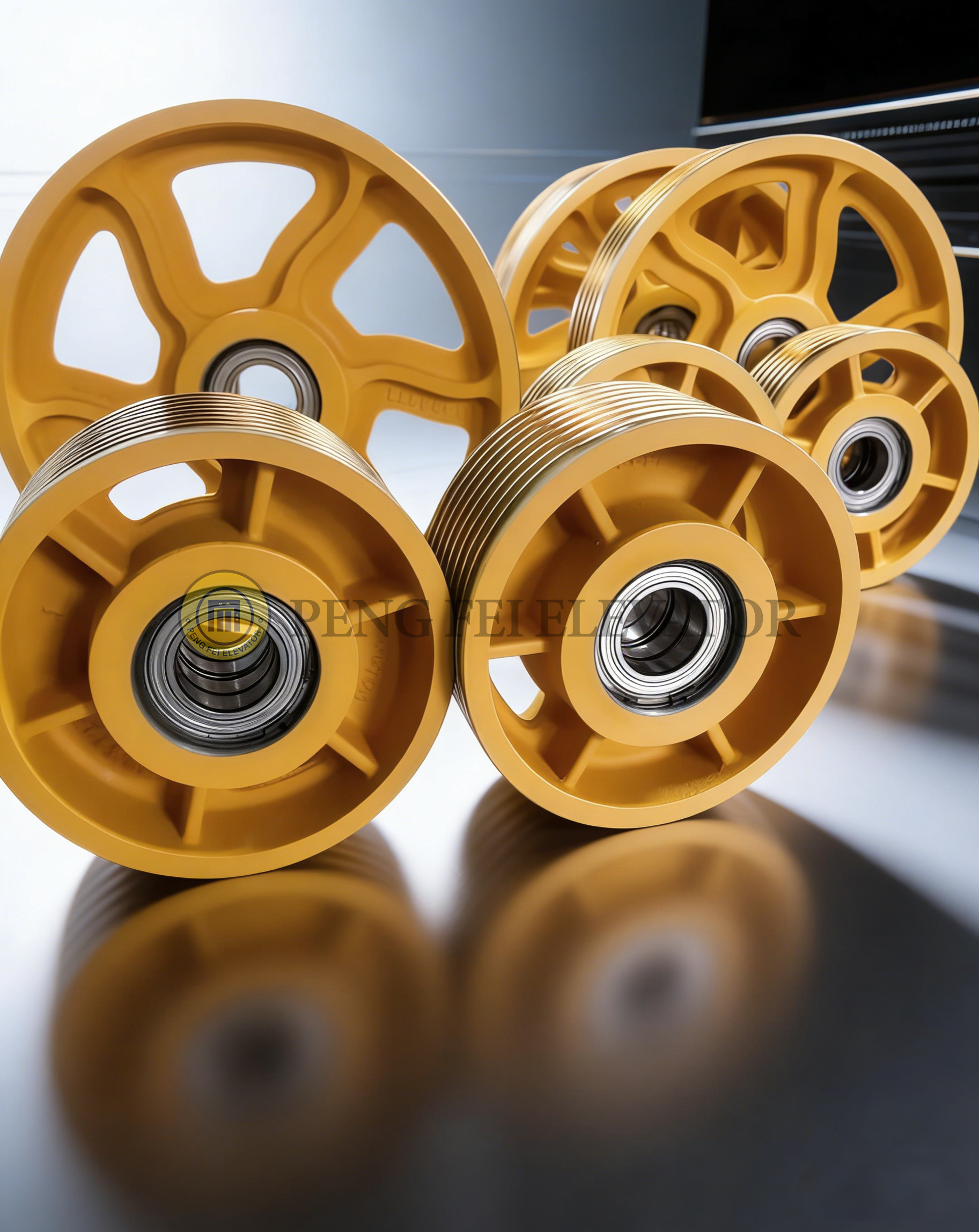
Installation Considerations for Elevator Traction Wheels
Installing an elevator traction wheel is a critical step in the assembly of a traction elevator system. Because this component directly transmits power from the motor to the elevator car through steel wire ropes, precise installation is essential for ensuring safe and efficient operation.
Before installing the traction wheel, technicians must carefully inspect the motor shaft and mounting surfaces. These surfaces must be clean and free of damage to ensure proper alignment. Any irregularities can cause vibration or uneven load distribution during operation.
The traction wheel is typically mounted on the motor shaft using a keyway or locking mechanism. This connection must be secure to prevent the wheel from slipping under heavy loads. Proper torque must be applied when tightening mounting bolts to ensure stability.
Alignment between the traction wheel and the wire ropes is another important factor. If the wheel is not perfectly aligned with the rope path, the ropes may experience uneven tension and accelerated wear. Precision measuring tools are used to verify alignment during installation.
Technicians also check the rope groove alignment to ensure that each rope sits properly within its groove. Improper positioning may lead to rope slippage or uneven traction performance.
Another consideration during installation is the balance of the traction system. The elevator car and counterweight must be balanced so that the traction wheel operates under optimal conditions. Proper balancing reduces motor load and improves energy efficiency.
After installation is complete, technicians perform operational testing. The elevator is run through several cycles to confirm smooth movement and proper traction. During these tests, engineers monitor noise, vibration, and rope movement.
Routine inspections should also be performed after installation to ensure that the traction wheel remains properly aligned and securely mounted. Any changes in vibration or noise levels may indicate a potential problem that requires attention.
Correct installation of traction wheels ensures reliable elevator operation and reduces the risk of mechanical failures. Because the traction wheel is one of the most critical components in the system, careful installation procedures must always be followed.
With proper installation and maintenance, traction wheels can provide many years of dependable service in modern elevator systems.
We offer various mechanical replacement parts for escalators and elevators. The products include escalator tooth plates, step frame strips, wear-resistant guide rail strips, step rollers, sprockets, driving rollers, driving friction wheels, driving shafts, gear assemblies, step chains, complete chain components, handrail belts, etc. In addition, we also provide elevator wire rope head assemblies, traction machine shock absorbers, car shock absorbers, sliding guide shoes, hollow guide rails, cast iron guide shoe shoes, traction wheels, guide wheels, buffers, etc. All wear-prone components suitable for electric escalators are compatible with mainstream elevator brands and are applicable for equipment maintenance, renovation projects, and new machine assembly. We offer OEM customization services and can handle large-scale orders as well as small-scale repair orders. Our products are of stable quality and the factory direct sales price has a significant advantage.