Types of Elevator Counterweight Blocks and Their Applications
Elevator counterweight blocks are available in various types, each designed to meet specific operational requirements. The selection of the appropriate type depends on factors such as load capacity, installation environment, cost considerations, and system design.
One of the most common types is the cast iron counterweight block. This type is widely used in both passenger and freight elevators due to its high density and excellent durability. Cast iron allows for a compact design, making it suitable for installations where space is limited.
Another widely used type is the concrete counterweight block. These blocks are typically reinforced with steel and are more cost-effective compared to cast iron. However, they are larger in size due to their lower density. Concrete blocks are often used in low- to mid-rise buildings where space constraints are less critical.
Some elevator systems use steel plate counterweights, which consist of stacked steel plates. This design offers flexibility in adjusting the total weight and is commonly used in modern elevator systems that require precise balancing.
Modular counterweight blocks are also popular. These blocks are designed to be easily added or removed, allowing for quick adjustments during installation or system upgrades. This flexibility is especially useful in projects where load requirements may change.
In high-performance elevators, manufacturers may use composite materials or specially engineered alloys to achieve optimal performance. These advanced materials offer improved strength and durability while reducing overall weight.
The choice of counterweight block also depends on environmental factors. In industrial environments, materials with high corrosion resistance may be required to ensure long-term reliability.
Proper selection of counterweight blocks is essential for achieving optimal elevator performance. Engineers must carefully evaluate all factors, including load requirements, space limitations, and cost efficiency.
As elevator technology continues to evolve, new materials and designs are being developed to improve the performance and sustainability of counterweight systems.
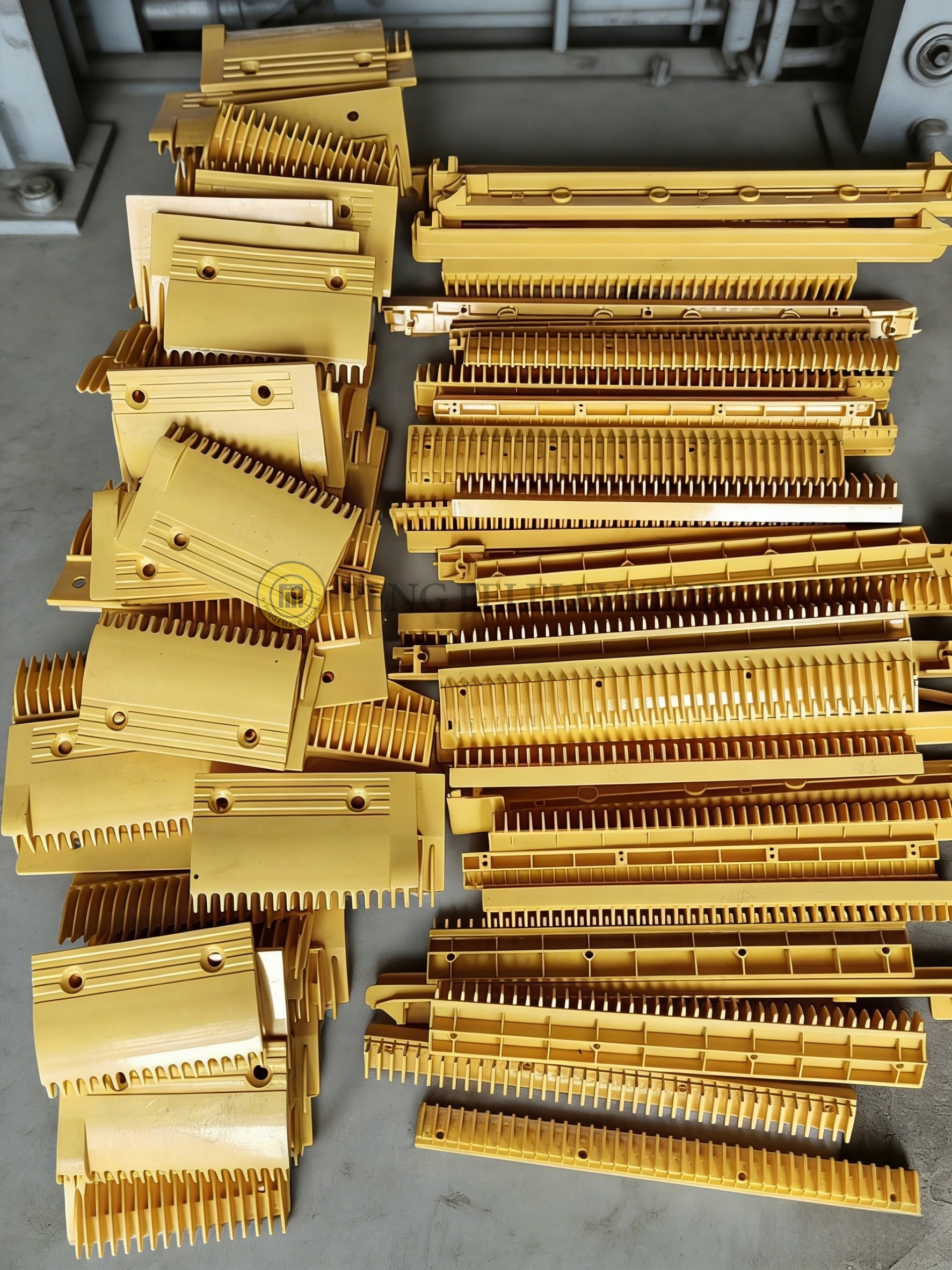
We offer various mechanical replacement parts for escalators and elevators. The products include escalator tooth plates, step frame strips, wear-resistant guide rail strips, step rollers, sprockets, driving rollers, driving friction wheels, driving shafts, gear assemblies, step chains, complete chain components, handrail belts, etc. In addition, we also provide elevator wire rope head assemblies, traction machine shock absorbers, car shock absorbers, sliding guide shoes, hollow guide rails, cast iron guide shoe shoes, traction wheels, guide wheels, buffers, etc. All wear-prone components suitable for electric escalators are compatible with mainstream elevator brands and are applicable for equipment maintenance, renovation projects, and new machine assembly. We offer OEM customization services and can handle large-scale orders as well as small-scale repair orders. Our products are of stable quality and the factory direct sales price has a significant advantage.