Industrial Elevator Parts Export Solutions
Industrial elevators play a crucial role in modern logistics, factories, and warehousing systems, and the quality of their components directly affects safety and service life. For companies engaged in international trade, understanding the characteristics and requirements of industrial elevator parts export is essential to ensure smooth operations. This article explores key aspects of exporting industrial elevator parts, including material selection, certifications, packaging, and transportation.
First, in terms of products, industrial elevator parts are diverse and include traction sheaves, guide rails, controllers, hydraulic cylinders, door systems, and safety devices. Each component has strict technical requirements. For example, traction sheaves must meet wear resistance and load-bearing standards, while hydraulic cylinders require materials and seals that prevent leakage during prolonged use. Export companies must implement rigorous quality control to meet both regulatory standards and customer expectations in target markets.
Certifications and standards are another critical factor in the export process. Different countries have varying safety requirements for elevator components. In Europe, CE marking is mandatory to ensure compliance with EU machinery safety directives and electromagnetic compatibility regulations. In the United States, UL or ANSI certifications may be required. Obtaining these certifications in advance reduces customs risks and enhances the company’s reputation in international markets.
Regarding packaging and transportation, industrial elevator parts are typically large and heavy. Packaging solutions must consider shock resistance, moisture protection, and corrosion prevention. High-strength wooden crates or metal pallets with cushioning materials can effectively prevent damage during long-distance transport. Planning optimal logistics routes and selecting appropriate transport methods are also crucial for reducing costs and delivery times.
Inventory and supply chain management are equally important. For exporters, establishing a reliable supply chain ensures that critical components are always available for shipment. Modern warehouse management systems can monitor inventory in real-time and optimize stock levels, improving operational efficiency and customer satisfaction.
In summary, exporting industrial elevator parts requires attention not only to product quality and technical standards but also to certifications, packaging, transportation, and supply chain management. Integrating these aspects into a comprehensive strategy ensures efficient and reliable export operations, providing companies with a competitive edge in the global market.
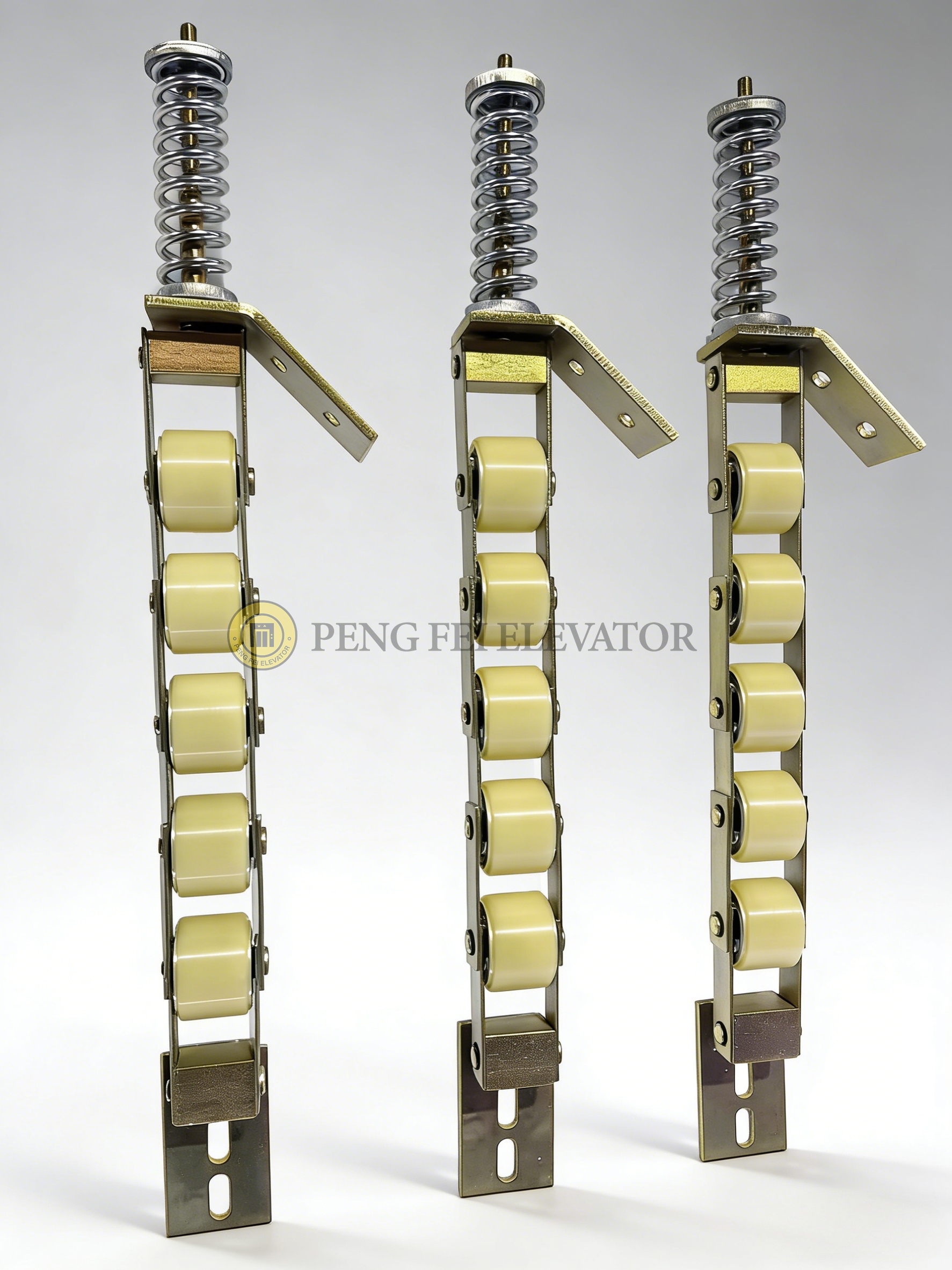
We offer various mechanical replacement parts for escalators and elevators. The products include escalator tooth plates, step frame strips, wear-resistant guide rail strips, step rollers, sprockets, driving rollers, driving friction wheels, driving shafts, gear assemblies, step chains, complete chain components, handrail belts, etc. In addition, we also provide elevator wire rope head assemblies, traction machine shock absorbers, car shock absorbers, sliding guide shoes, hollow guide rails, cast iron guide shoe shoes, traction wheels, guide wheels, buffers, etc. All wear-prone components suitable for electric escalators are compatible with mainstream elevator brands and are applicable for equipment maintenance, renovation projects, and new machine assembly. We offer OEM customization services and can handle large-scale orders as well as small-scale repair orders. Our products are of stable quality and the factory direct sales price has a significant advantage.