How Elevator Safety Standards Ensure Passenger Safety
Elevator safety is one of the most important considerations in modern buildings. With millions of elevators operating worldwide every day, strict safety standards are essential to ensure reliable performance and protect passengers.
Elevator safety standards define requirements for design, manufacturing, installation, inspection, and maintenance. These standards cover not only the elevator system itself but also critical components such as safety gear, governors, buffers, door locks, and braking systems.
For elevator manufacturers, suppliers, and maintenance companies, understanding these requirements helps improve product quality and ensure safer elevator operation.
Why Are Elevator Safety Standards Important?
Elevators are complex systems consisting of many mechanical and electrical components. A failure of any critical component may affect passenger safety.
Safety standards help to:
Reduce the risk of elevator accidents
Improve component reliability
Ensure consistent manufacturing quality
Guide proper installation and maintenance
Protect passengers and service personnel
By following international safety requirements, elevator companies can provide safer and more reliable transportation solutions.
Key Elevator Safety Components
Elevator Safety Gear
The safety gear is designed to stop the elevator car when overspeed conditions occur.
It works together with the governor system to:
Detect abnormal movement
Activate emergency braking
Prevent uncontrolled elevator travel
Safety gear is one of the most important protective devices in an elevator system.
Elevator Governor
The elevator governor continuously monitors elevator speed.
When the elevator exceeds the preset speed limit, the governor activates the safety gear to stop the car safely.
A reliable governor ensures quick response during emergency situations.
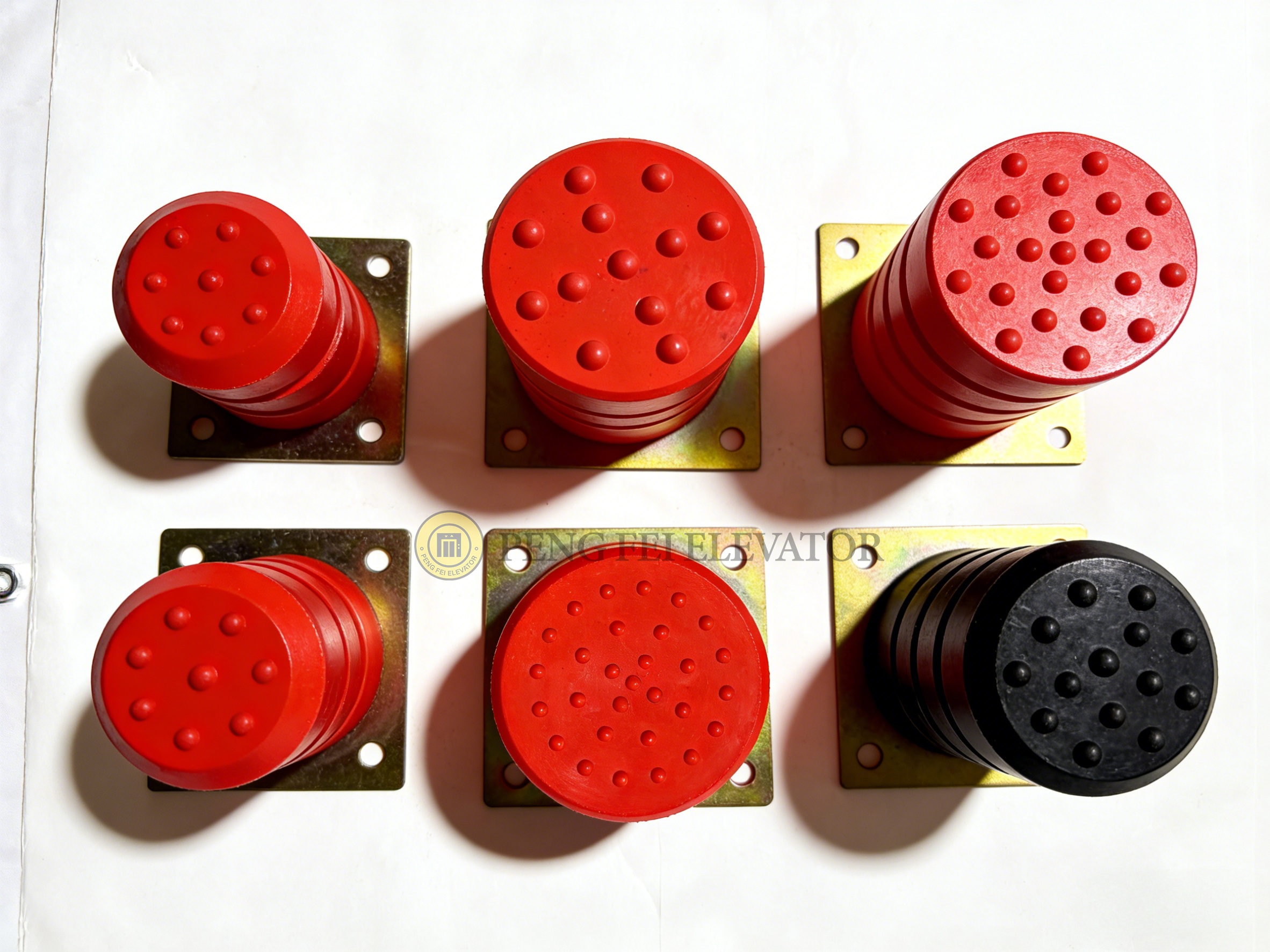
Elevator Buffer
The elevator buffer is installed at the bottom of the elevator shaft.
Its main function is to:
Absorb impact energy
Reduce collision force
Protect passengers and equipment
Different elevator applications require different types of buffers, such as hydraulic buffers and spring buffers.
Elevator Door Lock
The door lock is a critical safety device that prevents landing doors from opening when the elevator car is not at the correct floor.
It ensures:
Safe passenger access
Proper elevator operation
Prevention of accidental falls into the shaft
International Elevator Safety Standards
Different regions have their own elevator safety requirements.
Some widely recognized standards include:
EN 81 Series
The EN 81 standard is widely used in Europe and many international markets. It covers safety rules for the construction and installation of elevators.
ASME A17.1 / CSA B44
These standards are commonly applied in North America and provide requirements for elevator design, inspection, and maintenance.
ISO Elevator Standards
ISO standards provide international guidelines related to elevator safety, quality management, and technical requirements.
How Manufacturers Ensure Elevator Safety
Professional elevator component manufacturers must focus on several areas:
Material Selection
High-quality materials improve:
Strength
Wear resistance
Service life
Safety performance
Precision Manufacturing
Accurate manufacturing ensures that components fit correctly and operate reliably.
Important factors include:
Dimensional accuracy
Surface quality
Product consistency
Quality Inspection
Before delivery, elevator components should undergo strict testing.
Inspection may include:
Performance testing
Material inspection
Load testing
Safety verification
The Role of Elevator Maintenance
Even high-quality elevator components require regular maintenance.
Maintenance helps:
Identify potential problems early
Replace worn parts
Maintain safety performance
Extend equipment lifespan
Important inspection items include:
Door systems
Safety devices
Guide systems
Brake systems
Electrical controls
How to Choose a Reliable Elevator Parts Supplier
When selecting an elevator parts supplier, buyers should consider:
Product Quality
Reliable suppliers should provide durable and stable components.
Industry Experience
Experienced manufacturers understand elevator applications and safety requirements.
Technical Support
Professional suppliers can provide product recommendations and technical assistance.
Quality Control System
Strict quality management ensures consistent product performance.
Why Choose PF Elevator Parts?
PF Elevator Parts focuses on providing reliable elevator components for global customers.
Our product range includes:
Elevator Safety Gear
Elevator Governor
Elevator Buffer
Elevator Guide Shoe
Elevator Door Components
Other elevator spare parts
With professional manufacturing capabilities and strict quality control, PF Elevator Parts supports elevator manufacturers, distributors, and maintenance companies worldwide.
Frequently Asked Questions
Why do elevators need safety standards?
Safety standards help ensure elevators are designed, manufactured, installed, and maintained to protect passengers and equipment.
What are the most important elevator safety components?
Safety gear, governors, buffers, door locks, and braking systems are among the most important safety components.
How often should elevators be inspected?
Inspection frequency depends on local regulations, elevator usage, and maintenance requirements.
Do elevator spare parts need to meet safety standards?
Yes. Safety-related elevator components must meet applicable quality and safety requirements.
How can elevator safety be improved?
Using reliable components, professional installation, and regular maintenance are key factors in improving elevator safety.
Conclusion
Elevator safety standards provide the foundation for safe and reliable elevator operation. From safety gear and governors to door locks and buffers, every component plays an important role in protecting passengers.
For elevator manufacturers and maintenance companies, choosing high-quality components from reliable suppliers is essential to meeting safety requirements and ensuring long-term performance.
PF Elevator Parts continues to provide dependable elevator spare parts and professional solutions to support safer elevator systems worldwide.
We offer various mechanical replacement parts for escalators and elevators. The products include escalator tooth plates, step frame strips, wear-resistant guide rail strips, step rollers, sprockets, driving rollers, driving friction wheels, driving shafts, gear assemblies, step chains, complete chain components, handrail belts, etc. In addition, we also provide elevator wire rope head assemblies, traction machine shock absorbers, car shock absorbers, sliding guide shoes, hollow guide rails, cast iron guide shoe shoes, traction wheels, guide wheels, buffers, etc. All wear-prone components suitable for electric escalators are compatible with mainstream elevator brands and are applicable for equipment maintenance, renovation projects, and new machine assembly. We offer OEM customization services and can handle large-scale orders as well as small-scale repair orders. Our products are of stable quality and the factory direct sales price has a significant advantage.