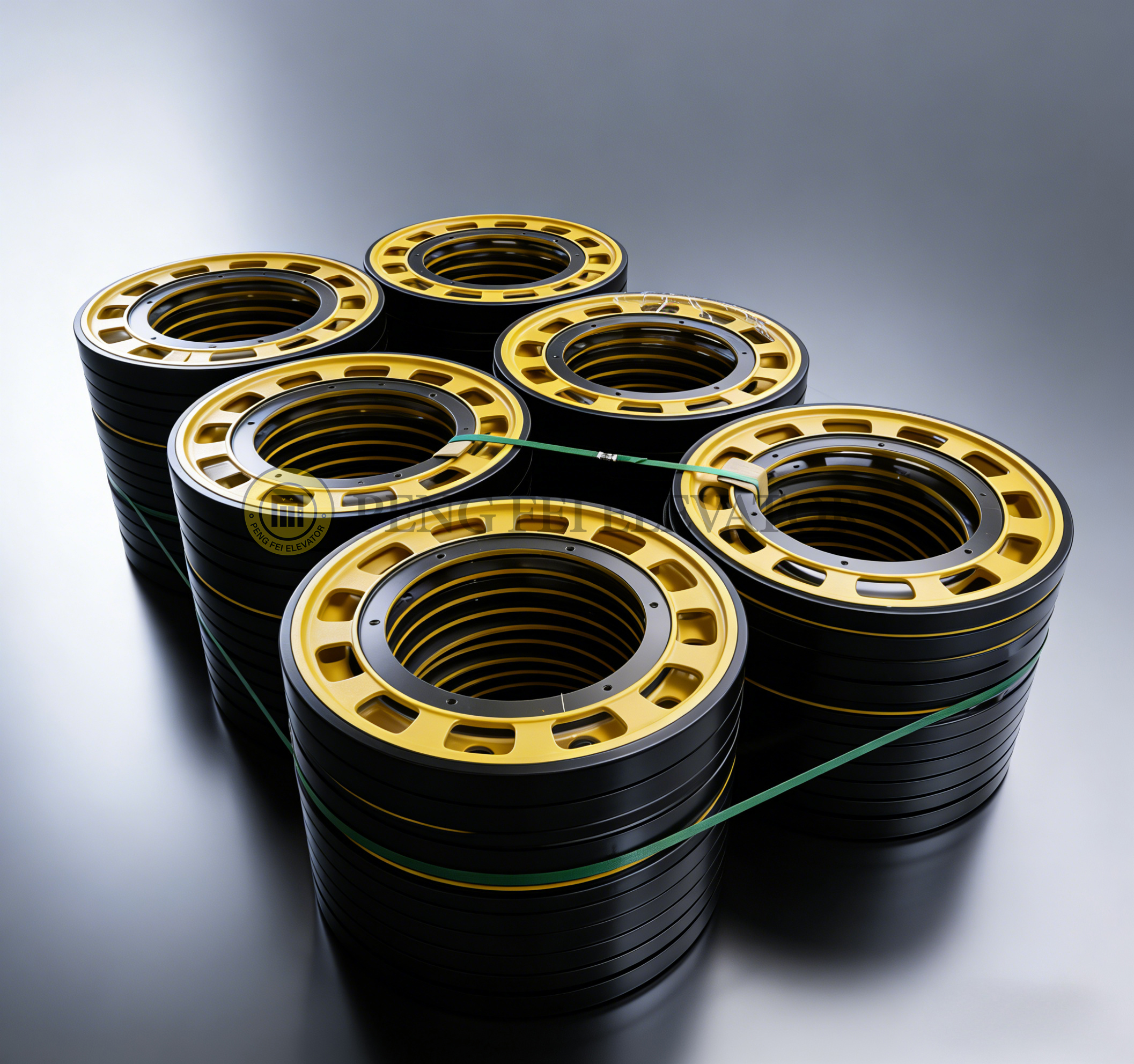
Traction Sheave Groove Wear: Causes, Inspection and Replacement Guide
The traction sheave is a critical mechanical component in an elevator traction system. It transfers the driving force from the traction machine to the wire ropes, allowing the elevator car and counterweight to move vertically.
Because the wire ropes continuously run through the sheave grooves, the groove surface is exposed to repeated friction and mechanical loading. Over time, wear can change the original groove profile and affect traction performance.
For elevator maintenance companies, spare parts distributors, and OEM buyers, understanding traction sheave groove wear is important when evaluating maintenance requirements and replacement components.
What Causes Traction Sheave Groove Wear?
Traction sheave wear is usually the result of long-term operation, but several factors can accelerate the process.
Wire Rope Contact
The wire rope repeatedly passes through the sheave grooves during elevator operation. Continuous contact gradually affects the groove surface.
If the rope and groove are not properly matched, localized wear may occur more quickly.
Uneven Load Distribution
Uneven loading can cause different grooves to wear at different rates.
This may result in:
Uneven groove depth
Different rope contact conditions
Increased vibration
Reduced traction consistency
Improper Rope Condition
Worn, damaged, or improperly maintained wire ropes can accelerate traction sheave wear.
For this reason, traction sheave inspection should normally be considered together with wire rope condition.
Insufficient Maintenance
Contamination, incorrect lubrication practices, or delayed replacement of worn components may contribute to premature wear.
Regular inspection helps maintenance teams identify changes before they become more serious.
How to Identify Traction Sheave Groove Wear
Visual inspection is a useful first step, but groove wear should not be evaluated by appearance alone.
Maintenance personnel can check for:
Changes in groove shape
Uneven groove depth
Visible surface damage
Abnormal rope positioning
Increased operating noise
Rope slippage or traction problems
Where required, dimensional measurements should be compared with the manufacturer's specifications.
Why Traction Sheave Groove Shape Matters
The groove profile determines how the wire rope contacts the traction sheave.
A properly designed groove provides the required relationship between:
Rope diameter
Groove geometry
Contact area
Traction performance
If the groove becomes excessively worn, the original contact relationship may change.
This can influence rope wear and traction performance.
For replacement projects, buyers should therefore pay attention to the traction sheave groove shape rather than selecting a component based only on external dimensions.
When Should a Traction Sheave Be Replaced?
There is no universal replacement interval for every traction sheave.
The replacement decision should be based on actual operating conditions and inspection results.
Replacement may need to be considered when:
Groove wear exceeds the permitted limit
Groove profiles become significantly distorted
The sheave develops cracks or structural damage
Rope contact becomes abnormal
Traction performance cannot be restored through normal maintenance
The traction sheave groove wear limit should be determined according to the applicable equipment specifications and maintenance requirements rather than an arbitrary service period.
What About Traction Sheave Bearings?
The traction sheave assembly may also include bearings that require inspection during maintenance.
Signs of potential bearing problems include:
Abnormal noise
Excessive vibration
Increased resistance
Abnormal temperature
Irregular rotation
If the bearing reaches the end of its service life, a traction sheave bearing replacement may be required.
When replacing bearings, technicians should confirm the correct bearing model, dimensions, load requirements, and installation method.
Can a Worn Traction Sheave Be Repaired?
The answer depends on the extent and type of wear.
Minor issues may sometimes be addressed through approved maintenance procedures, but significant groove deformation or structural damage may require complete replacement.
Before deciding between repair and replacement, maintenance teams should evaluate:
Groove dimensions
Surface condition
Material condition
Wire rope compatibility
Overall sheave condition
A professional assessment is preferable to repairing a component simply because replacement appears more expensive.
How to Select a Traction Sheave Supplier
For elevator parts buyers, supplier selection is an important part of the replacement process.
A reliable traction sheave supplier should be able to provide:
Accurate Dimensions
The supplier should control critical dimensions during manufacturing.
Suitable Groove Design
The groove profile should match the required wire rope and application.
Quality Materials
Material selection affects strength, wear resistance, and service life.
Technical Documentation
Drawings, specifications, and dimensional information can help buyers verify compatibility.
OEM Customization
For replacement projects involving different elevator systems, customized production according to drawings or samples can be particularly useful.
Why Choose PF Elevator Parts?
PF Elevator Parts supplies elevator and escalator spare parts for global maintenance companies, distributors, and OEM customers.
Our product range includes traction sheaves, deflector sheaves, guide rollers, guide shoes, buffers, step chains, and other elevator and escalator components.
With professional manufacturing capabilities and OEM customization support, PF Elevator Parts provides replacement solutions for different elevator component requirements.
Final Thoughts
Traction sheave groove wear is a normal consideration in long-term elevator maintenance, but excessive wear should not be ignored.
Regular inspection of groove condition, wire rope contact, bearings, and overall sheave performance can help maintenance teams identify problems before they affect elevator operation.
When replacement becomes necessary, selecting a traction sheave with the correct groove profile, dimensions, and material is essential. Working with an experienced elevator parts manufacturer can also improve compatibility and long-term supply reliability.
We offer various mechanical replacement parts for escalators and elevators. The products include escalator tooth plates, step frame strips, wear-resistant guide rail strips, step rollers, sprockets, driving rollers, driving friction wheels, driving shafts, gear assemblies, step chains, complete chain components, handrail belts, etc. In addition, we also provide elevator wire rope head assemblies, traction machine shock absorbers, car shock absorbers, sliding guide shoes, hollow guide rails, cast iron guide shoe shoes, traction wheels, guide wheels, buffers, etc. All wear-prone components suitable for electric escalators are compatible with mainstream elevator brands and are applicable for equipment maintenance, renovation projects, and new machine assembly. We offer OEM customization services and can handle large-scale orders as well as small-scale repair orders. Our products are of stable quality and the factory direct sales price has a significant advantage.