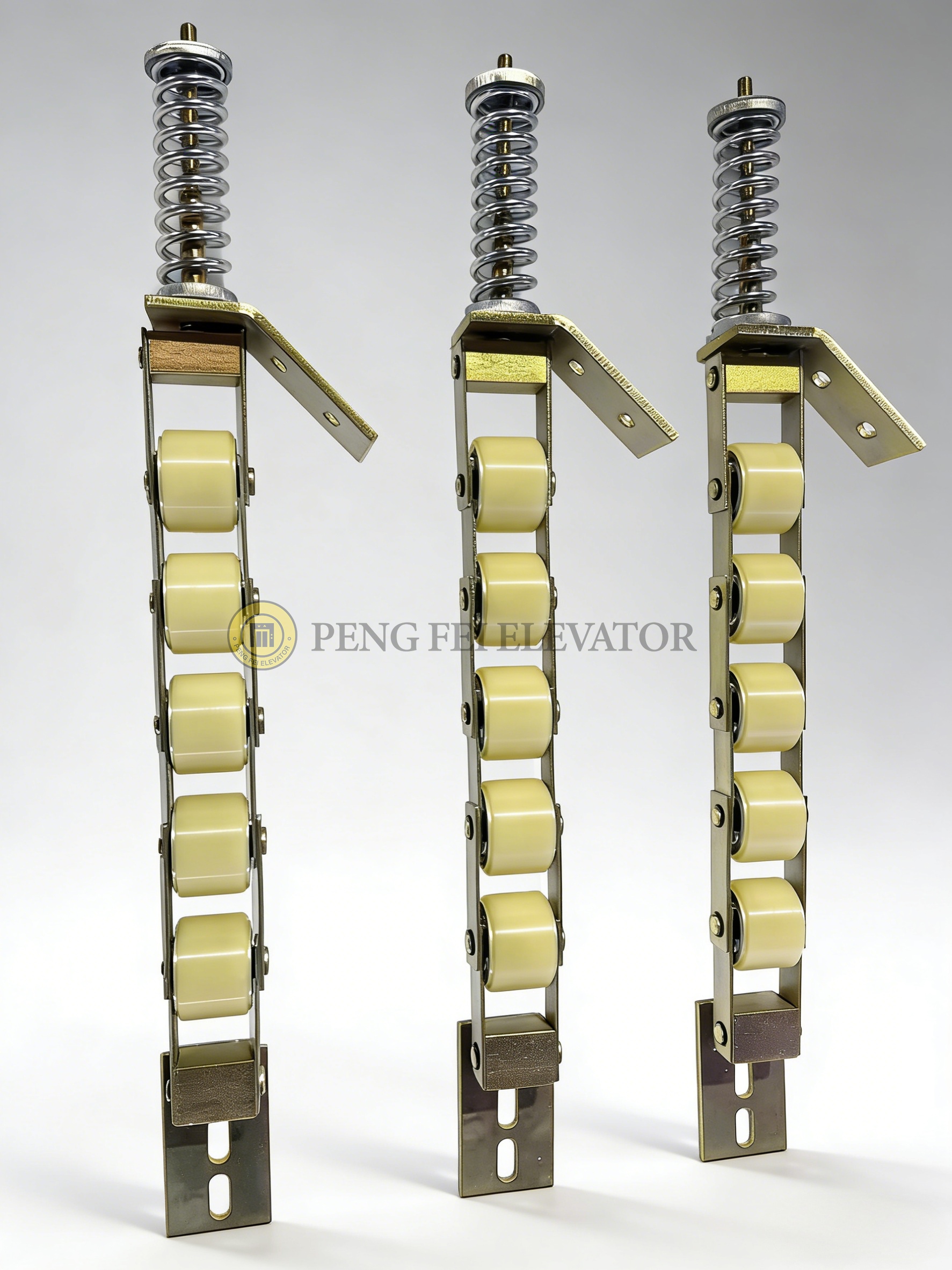
How to Choose the Right Elevator Door Roller for Reliable Door Operation
An elevator door system depends on several mechanical components working together to provide smooth, stable, and reliable opening and closing. Among these components, the elevator door roller plays an important role in guiding the movement of the elevator door and maintaining consistent operation.
For elevator maintenance companies, distributors, and OEM customers, selecting the correct door roller is not simply a matter of matching the appearance of an old component. Compatibility, material, dimensions, load capacity, and operating conditions should all be considered before purchasing elevator spare parts.
What Is an Elevator Door Roller?
An elevator door roller is a mechanical component used in the elevator door system to support and guide door movement. Depending on the door design, rollers may work together with door hangers, guide rails, locks, and other components to ensure that the door panels move smoothly along their intended path.
During daily operation, the roller is repeatedly subjected to movement, friction, vibration, and load. A worn or unsuitable roller can therefore affect the overall performance of the door system.
For this reason, an appropriate elevator door roller is an important part of routine elevator maintenance.
Why Is the Right Door Roller Important?
Elevator doors operate frequently throughout their service life. In commercial buildings, residential buildings, hospitals, hotels, and transportation facilities, the number of opening and closing cycles can be substantial.
A suitable door roller can help maintain:
Smooth door opening and closing
Stable movement of door panels
Reduced friction and vibration
Lower mechanical noise
More consistent door alignment
Longer service life of related door components
When a roller becomes damaged or excessively worn, common symptoms may include abnormal noise, uneven door movement, increased resistance, or irregular opening and closing.
These symptoms should be investigated as part of an overall elevator troubleshooting process.
Key Factors When Selecting an Elevator Door Roller
1. Check the Original Dimensions
Dimensions are one of the most important factors when replacing an elevator door roller.
Before purchasing a replacement, maintenance personnel should check the original roller's diameter, width, mounting dimensions, shaft size, and other relevant specifications. Even a small dimensional difference may affect installation or door movement.
Instead of selecting a roller only by appearance, buyers should confirm the technical specifications with the supplier.
2. Consider Material and Durability
The material of the roller directly influences its durability, wear resistance, and operating characteristics.
Different elevator door systems may require different roller materials depending on their structure and operating environment. A suitable material should provide an appropriate balance between mechanical strength, wear resistance, friction, and noise performance.
For high-frequency applications, durability becomes particularly important because the component may experience thousands of operating cycles.
3. Confirm Compatibility With the Door System
An elevator door roller does not work independently. It is normally integrated into a larger elevator door system.
Therefore, compatibility with the door hanger, guide rail, door panel, and other components should be confirmed before replacement.
For elevator parts distributors and OEM customers, providing detailed product specifications, drawings, or samples can make the matching process more efficient.
4. Consider the Application Environment
Different elevators operate under different conditions.
For example, elevators in residential buildings may have different operating frequencies from elevators used in shopping malls, hospitals, hotels, or commercial buildings.
The expected operating frequency, environmental conditions, maintenance schedule, and elevator door structure should all be considered when selecting an elevator spare parts supplier and replacement component.
Common Signs of Elevator Door Roller Wear
Regular inspection can help identify roller problems before they cause larger door-system issues.
Common warning signs include unusual noise during door movement, visible roller wear, unstable door movement, increased friction, vibration, or inconsistent opening and closing.
When these problems occur, technicians should inspect not only the roller but also related components such as the door hanger, guide rail, door lock, and mounting structure.
Replacing a worn component at the appropriate time can help reduce the risk of secondary damage to the elevator door system.
Why OEM and ODM Support Matters for Elevator Parts
For elevator manufacturers, maintenance companies, and international distributors, standard products may not always meet every application requirement.
OEM and ODM support can provide greater flexibility in dimensions, materials, structures, packaging, and product specifications.
A professional elevator parts manufacturer should be able to communicate technical requirements with customers and provide suitable solutions based on drawings, samples, or application specifications.
This is particularly useful for customers sourcing elevator door roller, elevator door hanger roller, and other elevator door components for different markets.
Conclusion
The elevator door roller is a relatively small component, but it has an important influence on the performance of the elevator door system. Selecting the right roller requires more than checking its appearance. Dimensions, materials, compatibility, operating conditions, and application requirements should all be evaluated.
For elevator maintenance companies, distributors, and OEM customers, working with a reliable elevator spare parts manufacturer can make product selection, replacement, and long-term supply more efficient.
The right component helps support smoother door operation, more reliable maintenance, and better overall elevator door performance.
We offer various mechanical replacement parts for escalators and elevators. The products include escalator tooth plates, step frame strips, wear-resistant guide rail strips, step rollers, sprockets, driving rollers, driving friction wheels, driving shafts, gear assemblies, step chains, complete chain components, handrail belts, etc. In addition, we also provide elevator wire rope head assemblies, traction machine shock absorbers, car shock absorbers, sliding guide shoes, hollow guide rails, cast iron guide shoe shoes, traction wheels, guide wheels, buffers, etc. All wear-prone components suitable for electric escalators are compatible with mainstream elevator brands and are applicable for equipment maintenance, renovation projects, and new machine assembly. We offer OEM customization services and can handle large-scale orders as well as small-scale repair orders. Our products are of stable quality and the factory direct sales price has a significant advantage.