4 Signs Your Elevator Guide Shoes Need Immediate Attention
4 Signs Your Elevator Guide Shoes Need Immediate Attention
Most guide shoe failures don't happen overnight.
In many cases, the guide shoe has been showing warning signs for weeks or even months before a serious problem occurs. Unfortunately, these early symptoms are often overlooked during routine maintenance.
For maintenance technicians, identifying these signs early can help reduce repair costs and prevent unnecessary downtime.
Sign 1: The Elevator Starts to Vibrate More Than Usual
Passengers rarely describe vibration using technical terms.
Instead, they may report:
"The elevator doesn't feel as smooth as before."
When this happens, don't inspect only the guide rails.
Also check:
Roller wear
Guide shoe inserts
Mounting bolts
Rail alignment
Small changes in vibration often indicate early guide shoe wear.
Sign 2: Fine Black Dust Around the Guide Shoes
During pit or car-top inspections, technicians sometimes notice fine black dust.
This is usually caused by continuous friction between the guide shoe and guide rail.
Possible reasons include:
Guide shoe clearance is too small.
Inserts have reached their wear limit.
Lubrication is insufficient.
Ignoring this dust may lead to accelerated wear of both the guide shoe and the guide rail.
Sign 3: One Side Wears Faster Than the Other
Guide shoes should wear relatively evenly.
If only one side shows heavy wear, it often indicates another problem rather than a defective guide shoe.
Possible causes include:
Rail misalignment
Incorrect installation
Loose brackets
Uneven load distribution
Replacing the guide shoe without correcting the root cause may result in the same problem returning after only a few months.
Sign 4: Noise Changes After Maintenance
If unusual noise appears immediately after replacing a guide shoe, don't assume the new component is defective.
First check:
Installation position
Bolt torque
Guide shoe clearance
Roller rotation
Rail cleanliness
Many post-maintenance noise problems are related to installation rather than product quality.
A Simple Inspection Routine
During every scheduled maintenance visit, consider checking:
✔ Roller rotation
✔ Guide shoe inserts
✔ Lubrication condition
✔ Fastener tightness
✔ Rail surface cleanliness
✔ Abnormal wear marks
A five-minute inspection can often prevent hours of emergency repair work later.
Why Root Cause Matters More Than Replacement
Replacing worn guide shoes is part of normal elevator maintenance.
However, experienced technicians know that components usually wear because of another issue.
Whenever guide shoe wear is discovered, inspect the surrounding system rather than replacing only the worn part.
This approach improves maintenance quality, reduces repeat repairs, and helps customers avoid unnecessary costs.
Why Choose PF Elevator Parts?
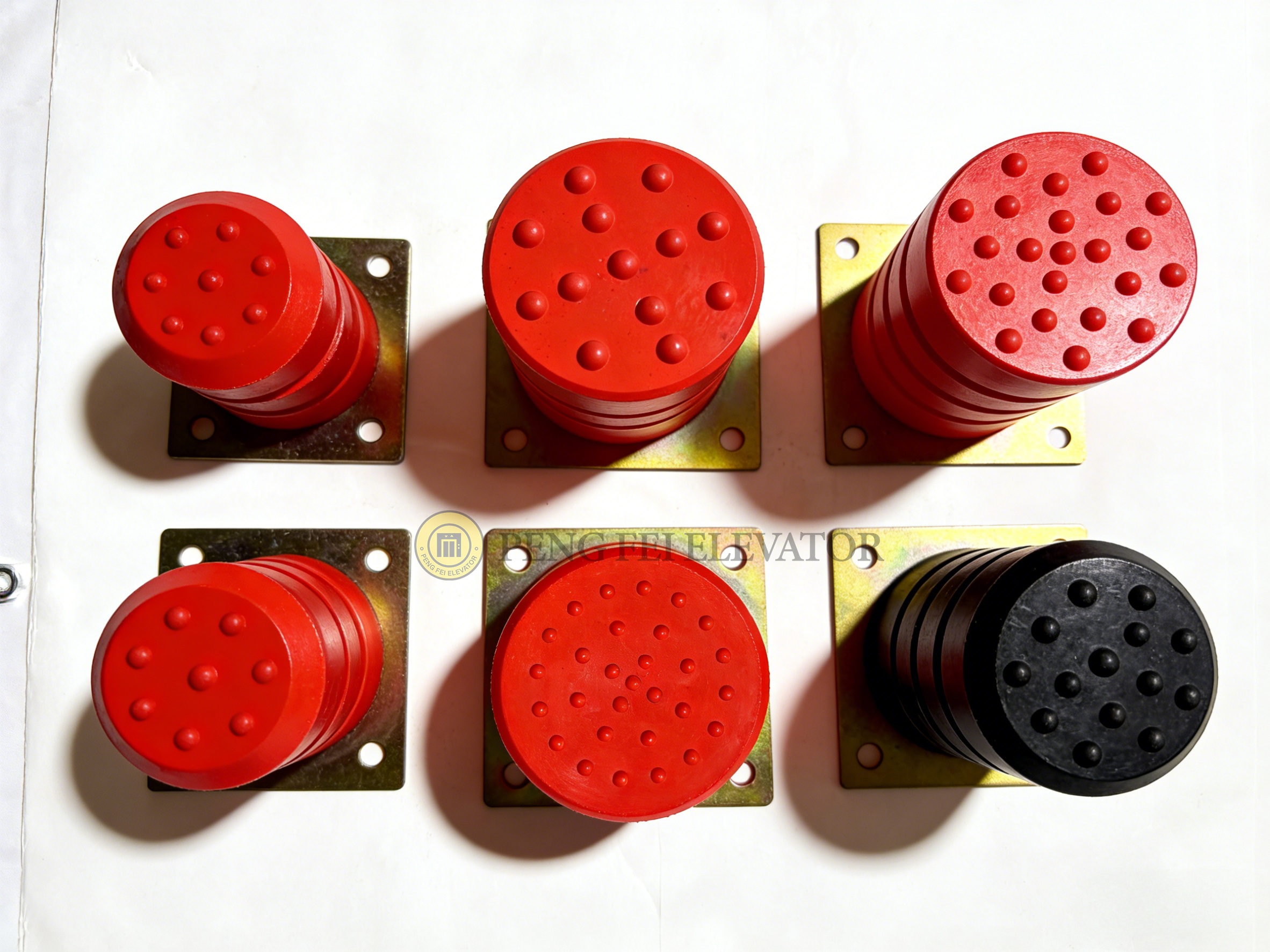
PF Elevator Parts manufactures a wide range of elevator and escalator spare parts, including roller guide shoes, sliding guide shoes, guide rollers, traction sheaves, buffers, and other replacement components.
We support distributors, maintenance companies, and OEM customers with reliable products, stable quality, and customized manufacturing services for different elevator applications.
Final Thoughts
Guide shoe wear is not simply a replacement issue—it is often an early warning that another part of the elevator system needs attention.
By recognizing these warning signs and combining routine inspections with quality replacement parts, maintenance teams can improve elevator reliability, reduce unexpected breakdowns, and deliver better long-term service to building owners.
We offer various mechanical replacement parts for escalators and elevators. The products include escalator tooth plates, step frame strips, wear-resistant guide rail strips, step rollers, sprockets, driving rollers, driving friction wheels, driving shafts, gear assemblies, step chains, complete chain components, handrail belts, etc. In addition, we also provide elevator wire rope head assemblies, traction machine shock absorbers, car shock absorbers, sliding guide shoes, hollow guide rails, cast iron guide shoe shoes, traction wheels, guide wheels, buffers, etc. All wear-prone components suitable for electric escalators are compatible with mainstream elevator brands and are applicable for equipment maintenance, renovation projects, and new machine assembly. We offer OEM customization services and can handle large-scale orders as well as small-scale repair orders. Our products are of stable quality and the factory direct sales price has a significant advantage.