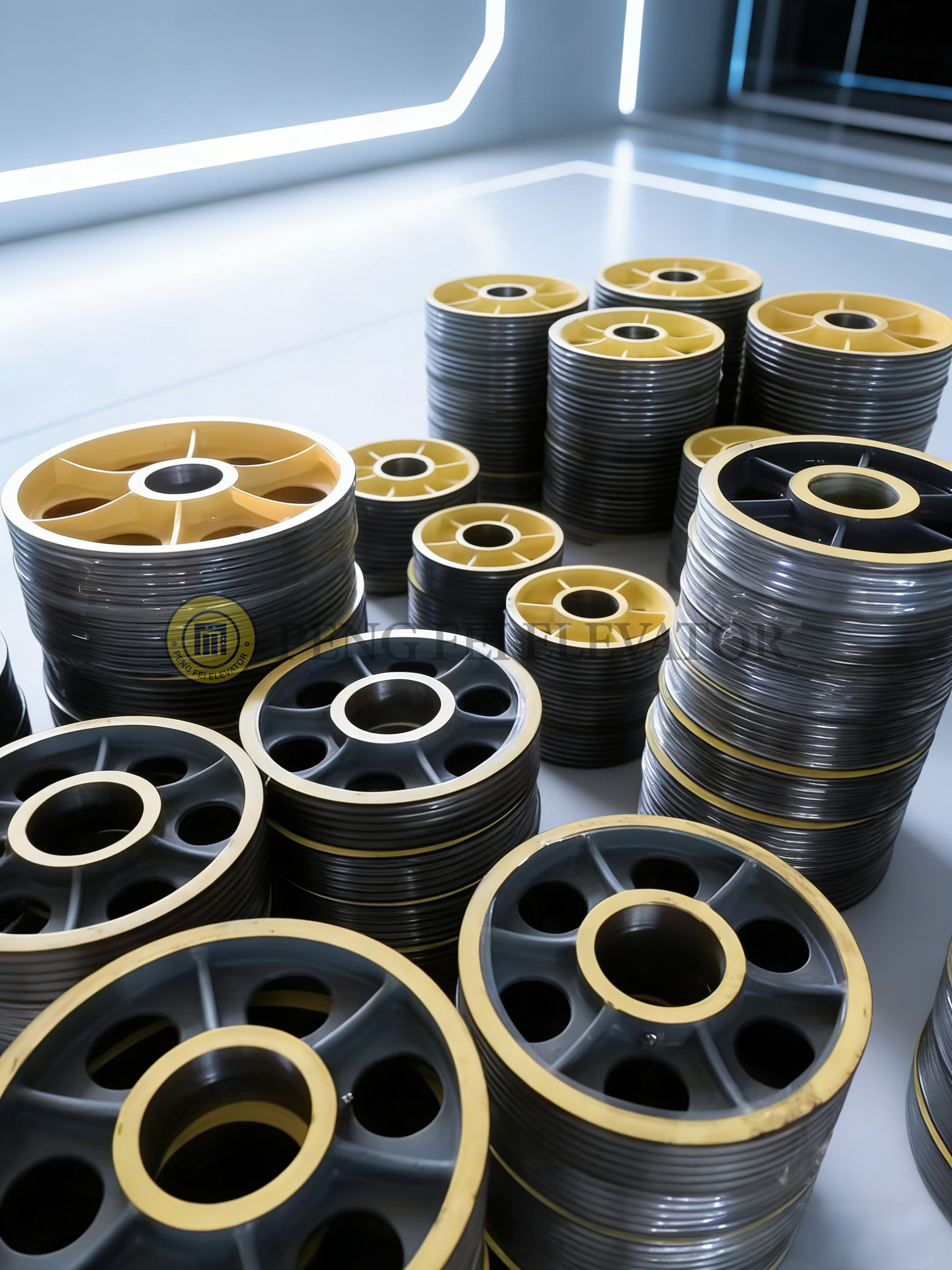
Repair or Replace? How to Decide When an Elevator Guide Roller Has Reached the End of Its Service Life
One of the most common questions during elevator maintenance is not how to replace a guide roller, but whether it actually needs to be replaced.
Replacing components too early increases maintenance costs, while delaying replacement may lead to additional wear on guide rails and other mechanical parts. Making the right decision requires more than a visual inspection—it requires understanding how the guide roller has been performing in real operating conditions.
Wear Is Normal—Abnormal Wear Is the Real Concern
Every guide roller experiences wear over time. This alone is not a reason for immediate replacement.
Instead, technicians should determine whether the wear is uniform or abnormal.
Signs of abnormal wear include:
·One-sided wheel wear
·Deep grooves on the roller surface
·Cracked polyurethane coating
·Uneven rotation
·Excessive bearing play
These conditions usually indicate that another part of the guide system should also be inspected.
Consider the Operating Environment
The service life of a guide roller depends heavily on where the elevator is installed.
For example:
·Residential elevators generally experience moderate daily use.
·Office buildings may have concentrated peak-hour traffic.
·Hospitals often require smooth and continuous operation.
·Industrial facilities may expose rollers to dust and heavier loads.
Evaluating the operating environment helps maintenance teams make more accurate replacement decisions.
Listen to the Equipment Before Removing Parts
Experienced technicians often rely on operating sound before beginning disassembly.
A guide roller nearing the end of its service life may produce:
·Rhythmic vibration
·Intermittent squeaking
·Low-frequency rumbling
·Noise that increases with travel speed
These sounds provide useful diagnostic information and should be recorded before replacement.
Compare With Maintenance History
Inspection becomes more meaningful when combined with previous maintenance records.
Questions worth asking include:
·When was the roller last replaced?
·Has the same location shown repeated wear?
·Has guide rail alignment been adjusted recently?
·Have similar issues appeared on other elevators in the building?
Maintenance history often reveals patterns that a single inspection cannot.
Replacement Should Improve the Whole System
Installing a new guide roller should not be the final step.
After replacement, technicians should verify:
·Roller alignment
·Bearing movement
·Guide rail contact
·Fastener torque
·Elevator ride quality
A successful replacement restores smooth operation instead of simply installing a new component.
Choosing Replacement Parts That Last
A reliable guide roller should provide:
·Stable material performance
·Accurate dimensions
·Smooth bearing rotation
·Consistent manufacturing quality
For maintenance companies, selecting quality replacement parts reduces repeat service visits and improves customer satisfaction over time.
Why Choose PF Elevator Parts?
PF Elevator Parts manufactures guide rollers and a complete range of elevator and escalator spare parts for distributors, maintenance companies, and OEM customers worldwide.
Our manufacturing advantages include:
·Precision machining for consistent dimensions
·High-quality polyurethane materials for improved wear resistance
·Stable bearing performance
·OEM and custom production based on drawings or samples
·Strict quality inspection before shipment
By combining manufacturing experience with practical maintenance requirements, PF Elevator Parts delivers components that support reliable elevator operation in a wide range of applications.
Final Thoughts
A guide roller should never be replaced simply because it has been in service for a certain number of years. The best maintenance decisions are based on operating conditions, wear patterns, inspection results, and system performance.
By taking a diagnostic approach rather than a replacement-first approach, maintenance teams can reduce unnecessary costs, improve equipment reliability, and extend the service life of the entire guide system.
We offer various mechanical replacement parts for escalators and elevators. The products include escalator tooth plates, step frame strips, wear-resistant guide rail strips, step rollers, sprockets, driving rollers, driving friction wheels, driving shafts, gear assemblies, step chains, complete chain components, handrail belts, etc. In addition, we also provide elevator wire rope head assemblies, traction machine shock absorbers, car shock absorbers, sliding guide shoes, hollow guide rails, cast iron guide shoe shoes, traction wheels, guide wheels, buffers, etc. All wear-prone components suitable for electric escalators are compatible with mainstream elevator brands and are applicable for equipment maintenance, renovation projects, and new machine assembly. We offer OEM customization services and can handle large-scale orders as well as small-scale repair orders. Our products are of stable quality and the factory direct sales price has a significant advantage.