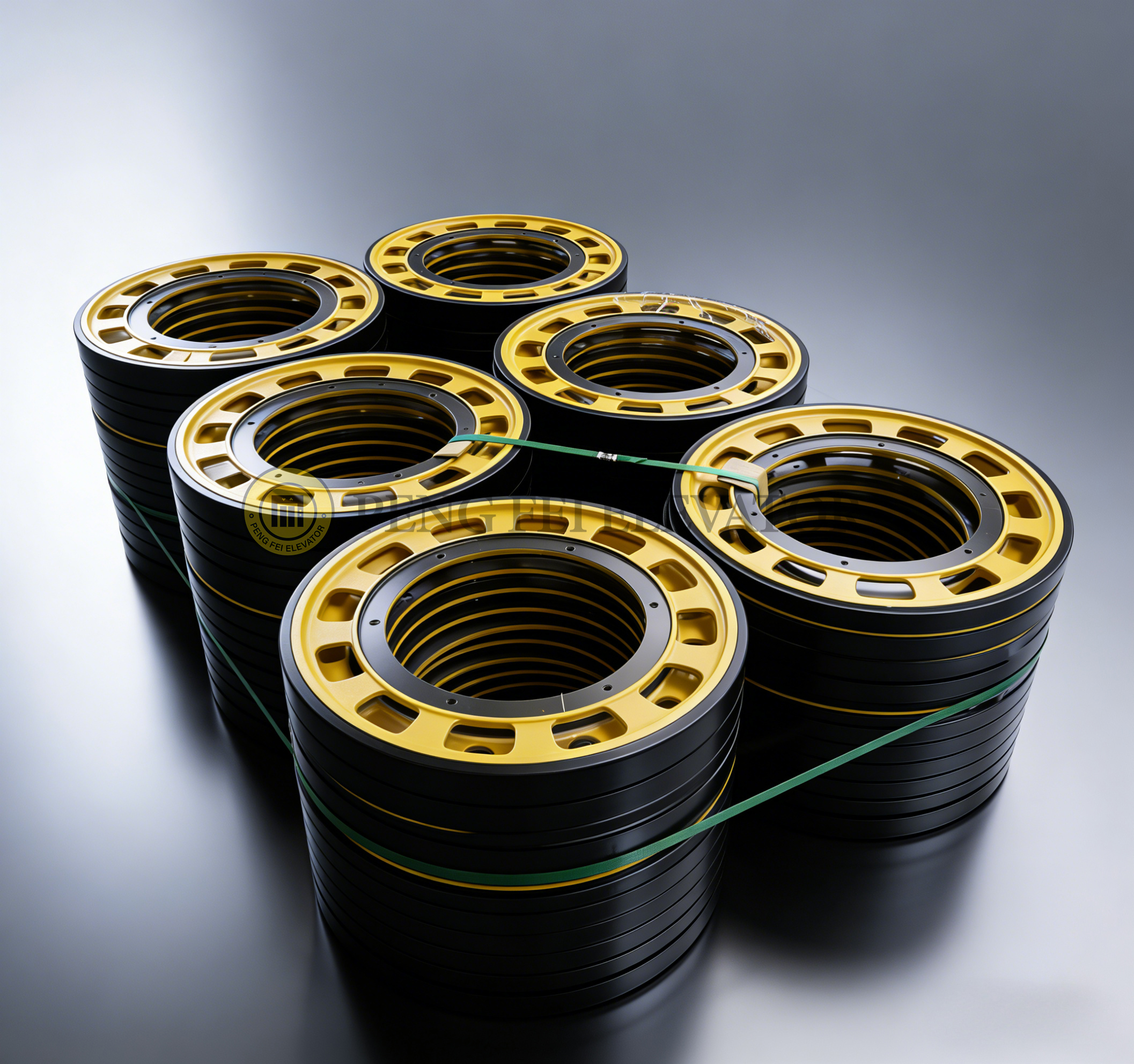
Elevator Guide Shoe Insert: What Intermittent Noise Can Tell Maintenance Teams
Not every elevator noise appears continuously.
Sometimes the elevator runs quietly during one trip and produces a noticeable rubbing or vibration sound during another.
For maintenance technicians, intermittent noise can be more difficult to diagnose than a component that has completely failed.
The elevator may still be operating, but something in the guide system may no longer be working under consistent conditions.
One component worth checking is the elevator guide shoe insert.
The insert is a relatively small part, but its condition can influence how the elevator car interacts with the guide rail.
For maintenance teams, the important question is not simply whether the insert is worn.
It is:
What does the wear pattern tell us about the actual operating condition?
Noise Does Not Always Mean One Component Has Failed
When unusual noise appears during elevator travel, it can be tempting to identify the nearest visible component as the source.
However, noise and vibration can be affected by several factors.
Depending on the elevator design and maintenance condition, technicians may need to consider:
Guide shoe condition
Guide shoe insert condition
Guide rail surface
Alignment
Lubrication condition where applicable
Mounting condition
Car movement
Related fastening components
This means that replacing the guide shoe insert should be based on inspection rather than noise alone.
A component may be worn, but the wear itself may also be influenced by another condition in the guide system.
Look at the Wear Pattern, Not Just the Wear Level
A guide shoe insert that has been operating for a long period will naturally show signs of use.
The more useful information can come from where and how the wear occurs.
Technicians can observe whether the insert has:
Even surface wear
Localized wear
Uneven contact
Scratching
Deformation
Cracking
Surface damage
Unusual material loss
An uneven pattern can be a reason to inspect the surrounding system more carefully.
For example, if one area shows significantly more wear than another, the maintenance team may want to check whether the contact condition is consistent throughout the elevator's travel.
The wear pattern is therefore not only a replacement signal.
It can also be a source of maintenance information.
Compare the Insert With the Guide Rail
The guide shoe insert and guide rail work together.
Looking at only one component can therefore provide an incomplete picture.
During maintenance, technicians can compare the condition of the insert with the corresponding guide rail surface.
Useful observations may include:
Surface marks
Abnormal contact areas
Contamination
Visible damage
Uneven wear
Changes along the travel path
The purpose is not to assume that one component caused the other to wear.
Instead, the comparison can help technicians determine whether the replacement should be limited to the insert or whether additional inspection is appropriate.
This system-level thinking can help reduce repeated replacement.
Why a New Insert May Not Solve Repeated Noise
Imagine a guide shoe insert is replaced and the elevator initially operates more quietly.
Several weeks or months later, the same type of noise returns.
This situation deserves further investigation.
If the replacement insert is repeatedly experiencing abnormal wear, maintenance teams may want to review the complete installation condition rather than simply changing the insert again.
Possible areas for inspection can include:
Guide rail condition
Guide shoe mounting
Alignment
Fastening
Contamination
Operating environment
Other related guide components
The purpose is to distinguish between normal component replacement and repeated abnormal wear.
That distinction can save maintenance time and help avoid unnecessary parts consumption.
Replacement Identification Is Also Important
Guide shoe inserts may look simple, but different elevator applications can require different dimensions or configurations.
Before ordering a replacement, maintenance teams can confirm:
Insert dimensions
Overall shape
Mounting arrangement
Contact surface dimensions
Material requirements
Existing guide shoe model
Photographs of the installed component
If the original component is available, a physical sample can provide additional reference information.
This becomes especially useful when the elevator is older and the original documentation is incomplete.
Material Selection Should Match the Application
A guide shoe insert is a contact component.
Its material therefore matters.
Different applications may require different material characteristics depending on the equipment design and operating conditions.
When replacing an existing insert, the manufacturer should understand the intended application rather than selecting material only according to appearance.
Useful information can include:
Existing insert material, if known
Operating environment
Guide rail condition
Existing wear characteristics
Elevator application
Customer requirements
For replacement development, the objective is not simply to produce a visually similar insert.
The material and dimensions should be considered together with the actual application.
What Maintenance Technicians Can Record During Inspection
A small inspection record can make future replacement much easier.
Technicians can document:
Existing Insert
Dimensions
Material information if available
Wear condition
Damage location
Photographs
Guide System
Guide rail condition
Visible contact marks
Mounting condition
Lubrication condition where applicable
Operating Symptoms
When the noise occurs
Whether it appears during upward or downward travel
Whether it occurs at specific sections of travel
Whether vibration accompanies the noise
This information can help the maintenance team communicate with a spare parts supplier more effectively.
It can also provide a useful reference for future maintenance.
From One Replacement to Better Maintenance Records
A replacement part should not disappear from the maintenance record once it has been installed.
For service companies managing multiple elevators, recording the replacement information can be valuable.
A basic record might include:
Part → dimensions → supplier → installation date → observed condition → replacement date
Over time, this can help maintenance teams understand whether a component is being replaced at a normal interval or whether a particular elevator requires additional investigation.
For distributors, these records can also help identify frequently requested replacement parts.
What a Manufacturer Can Learn From Returned Samples
From a manufacturer's perspective, an old guide shoe insert can provide valuable information.
If a customer is able to provide a worn sample together with photographs and basic operating information, the factory can better understand the replacement requirement.
The sample may help confirm:
Actual dimensions
Wear location
Contact surface
Material characteristics
Structural details
This can be especially useful for older equipment where drawings are unavailable.
At PF Elevator Parts, field information such as samples, photographs, measurements, and application details can provide a practical starting point for developing elevator spare parts.
The manufacturer does not have to rely only on a product name.
The actual component and its operating condition can become part of the technical reference.
When Standard Replacement and Custom Development Are Different
Not every guide shoe insert needs to be custom-made.
If the original specification is clearly identified, a standard replacement may be the most straightforward option.
Custom development becomes more relevant when:
The original part is discontinued
The equipment is an older model
Dimensions are unusual
The original drawing is unavailable
The customer has a physical sample
A special material or configuration is required
In these situations, the manufacturer's ability to understand samples and technical information becomes important.
A good replacement process starts with accurate identification before moving into production.
A Better Way to Look at Elevator Guide Shoe Problems
When an elevator develops intermittent noise or vibration, replacing a guide shoe insert may be part of the solution.
But the more valuable maintenance approach is to ask:
Where is the wear occurring?
What does the wear pattern look like?
Does the guide rail show corresponding marks?
Is the mounting condition correct?
Has the same problem happened before?
These questions help technicians move from simply replacing a component toward understanding the condition of the guide system.
Turning Maintenance Experience Into Better Spare Parts
For an elevator spare parts manufacturer, real maintenance experience is valuable.
Repeated feedback from technicians can help identify:
Common insert dimensions
Frequently requested materials
Common wear patterns
Older equipment requirements
Difficult-to-source configurations
This information can support future product development and improve how replacement parts are documented.
The process becomes:
Field observation → technical information → replacement evaluation → manufacturing → installation → feedback
That connection between maintenance teams and the factory is especially useful for elevator spare parts because many replacement requirements come from equipment that has already been operating for years.
Final Thoughts
An elevator guide shoe insert may be a small component, but its condition can provide useful information about the elevator's guide system.
For maintenance technicians, the most valuable approach is not simply to ask whether the insert is worn.
It is to understand:
how it is worn, where it is worn, what it is contacting, and whether the same condition has appeared before.
For spare parts manufacturers, this information can also improve replacement development.
At PF Elevator Parts, we focus on elevator and escalator spare parts with practical maintenance requirements in mind. When customers can provide the existing component, photographs, measurements, or samples, those details can help create a clearer basis for replacement evaluation and production.
The goal is not simply to supply another guide shoe insert.
The goal is to provide a replacement component that makes sense for the actual elevator maintenance situation.
We offer various mechanical replacement parts for escalators and elevators. The products include escalator tooth plates, step frame strips, wear-resistant guide rail strips, step rollers, sprockets, driving rollers, driving friction wheels, driving shafts, gear assemblies, step chains, complete chain components, handrail belts, etc. In addition, we also provide elevator wire rope head assemblies, traction machine shock absorbers, car shock absorbers, sliding guide shoes, hollow guide rails, cast iron guide shoe shoes, traction wheels, guide wheels, buffers, etc. All wear-prone components suitable for electric escalators are compatible with mainstream elevator brands and are applicable for equipment maintenance, renovation projects, and new machine assembly. We offer OEM customization services and can handle large-scale orders as well as small-scale repair orders. Our products are of stable quality and the factory direct sales price has a significant advantage.